
Working Paper
Asymmetric Labor Income Risk: Implications for Risk-Taking in Financial Markets
[SSRN]|
[SLIDES]
Show Abstract
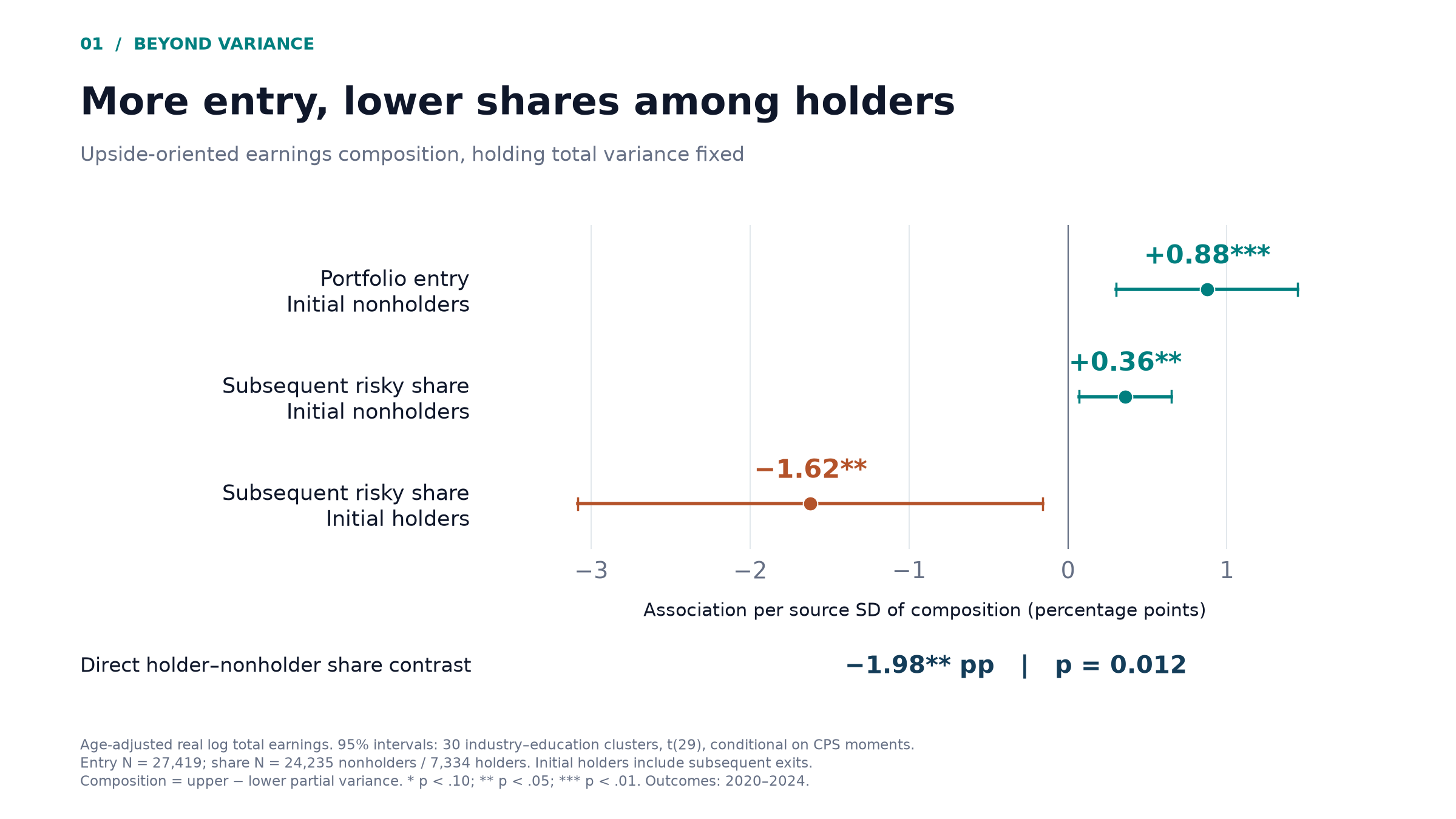
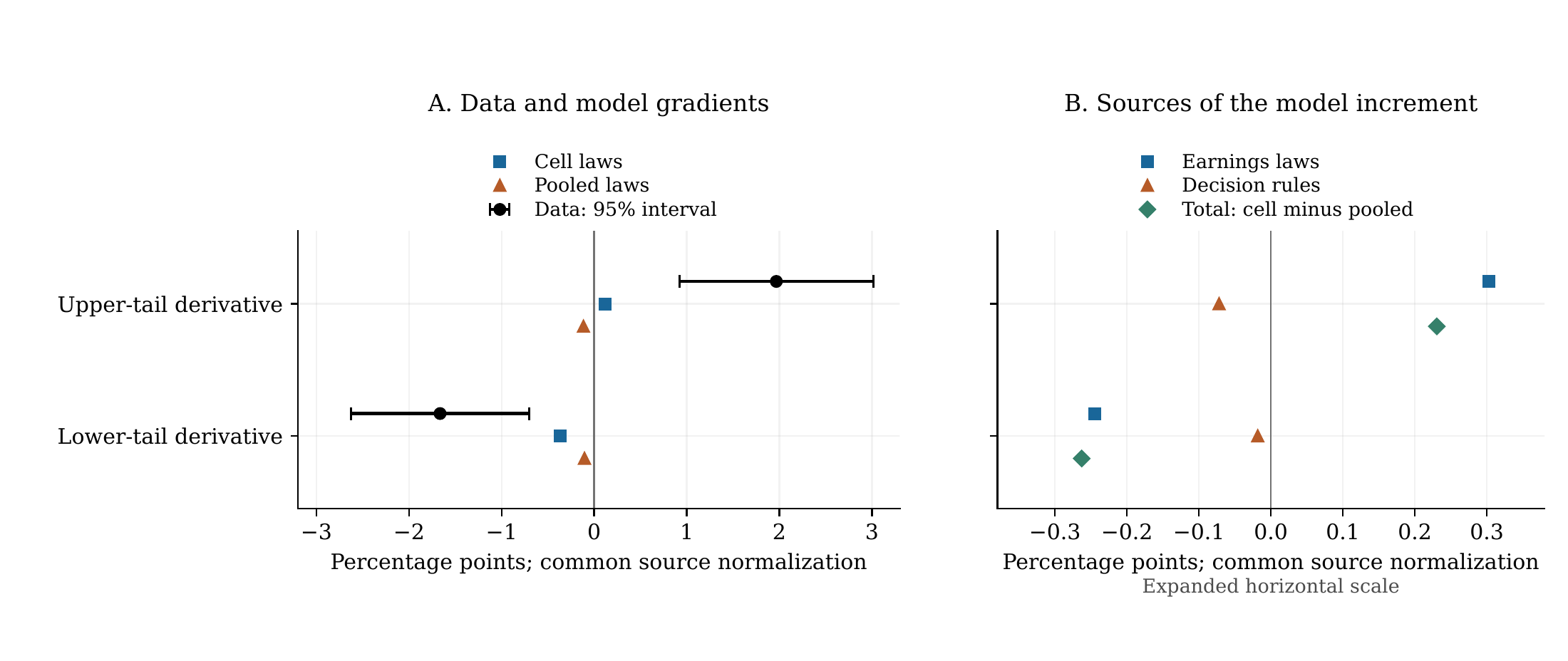
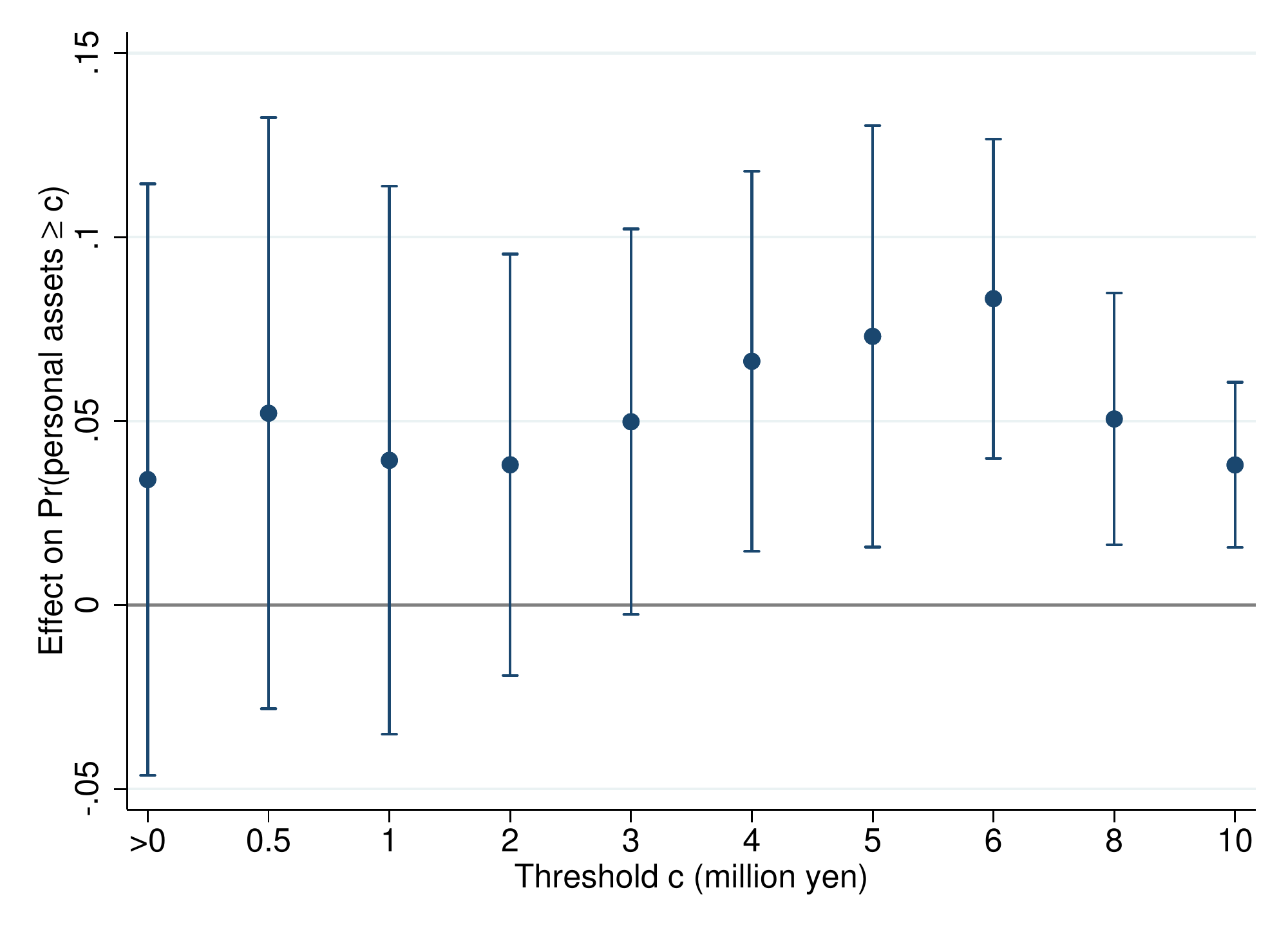
Abstract: The literature has documented a counterintuitive positive link between earnings volatility and stock holdings, posing a puzzle to researchers. I illustrate that this link is driven almost entirely by the right tail of the earnings distribution. Using the Survey of Income and Program Participation (SIPP), I construct a tail-dependent measure that interacts individuals’ labor income growth variance with its skewness. Holding income volatility constant, investors exposed to right-tail shocks (opportunity risk) increase their equity share, while those facing left-tail shocks (disaster risk) sharply reduce it. Moreover, the tail effects are asymmetric: left-tail risk hurts virtually all investors, whereas right-tail risk benefits only a subset. These results show that higher-order moments of labor-income risk shape portfolio choice, highlight the limitations of variance-based uncertainty metrics, and offer micro-level support for more robust portfolio-choice models.
Presented at: USI IdEP Brown Bag (USI, 2023, 2024, 2025), 2nd Workshop on Applied Macroeconomics and Monetary Policy (University of St. Gallen, 2024), Frankfurt Summer School 2024 (The Deutsche Bundesbank, 2024), Macro Finance Research Program (MFR) 2024 Summer Session for Young Scholars (University of Chicago, 2024), Gerzensee Alumni Conference (Study Center Gerzensee, 2024, 2025), RES PhD Conference 2024 (University of Portsmouth, 2024), German Finance Association (DGF) Annual Meeting 2025 Doctoral Workshop (University of Hagen, 2025), 10th Luxembourg Workshop on Household Finance and Consumption (Central Bank of Luxembourg, 2025), SFI PhD Student workshop (University of Zurich, 2025), 19th International Behavioural Finance Conference (Booth School of Business, 2025), 14th International Moscow Finance Conference (HSE Moscow, 2025), AFA 2026 (Philadelphia, 2026)
Hide Figures
Navigating Through Fear and Greed: The Experience-Driven Disposition Effect [SSRN]
with Rong Liu (TJU),
Jessica Wachter (Wharton),
Michael Kahana (UPenn) and
Yongjie Zhang (TJU)
Show Abstract
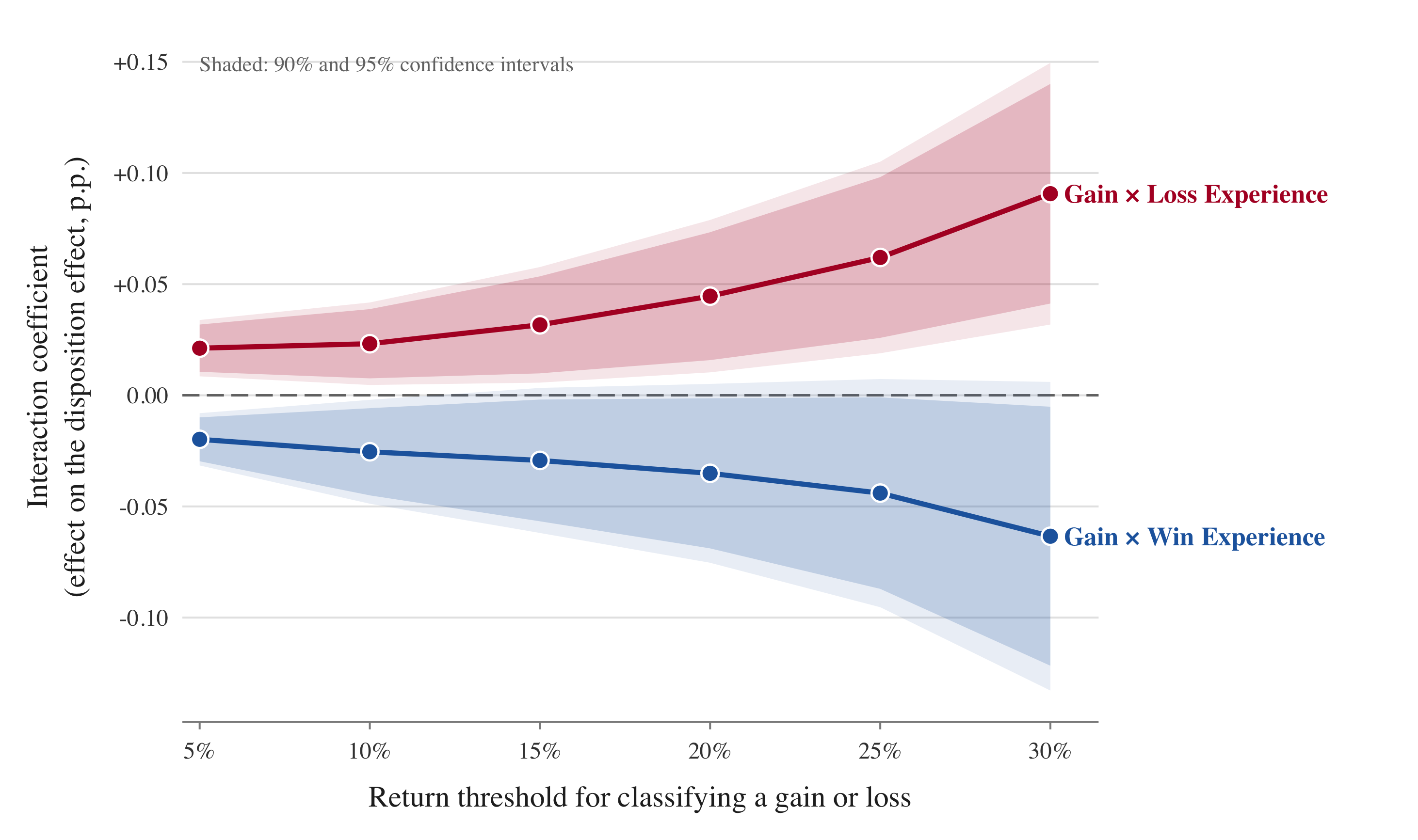
Abstract: Using transaction-level data on Chinese retail investors across a boom–bust cycle, we study how salient realized outcomes shape the disposition effect. We measure experience as counts of large realized gains or losses and find a sharp asymmetry: sequences of large gains attenuate the disposition effect, whereas sequences of large losses amplify it. To account for these facts, we develop a disciplined memory-based recall model in which similarity-weighted retrieval of past outcomes guides sell decisions. The model reproduces both the baseline disposition effect and the documented asymmetries, highlighting the critical—and asymmetric—role of experience in shaping trading behavior.
Presented at: USI IdEP Brown Bag (USI, 2024), Memory, Beliefs, and Choice (University of Pennsylvania, 2025)
Pricing the Unknown: Valuation Uncertainty and China's Housing Cycle
Show Abstract
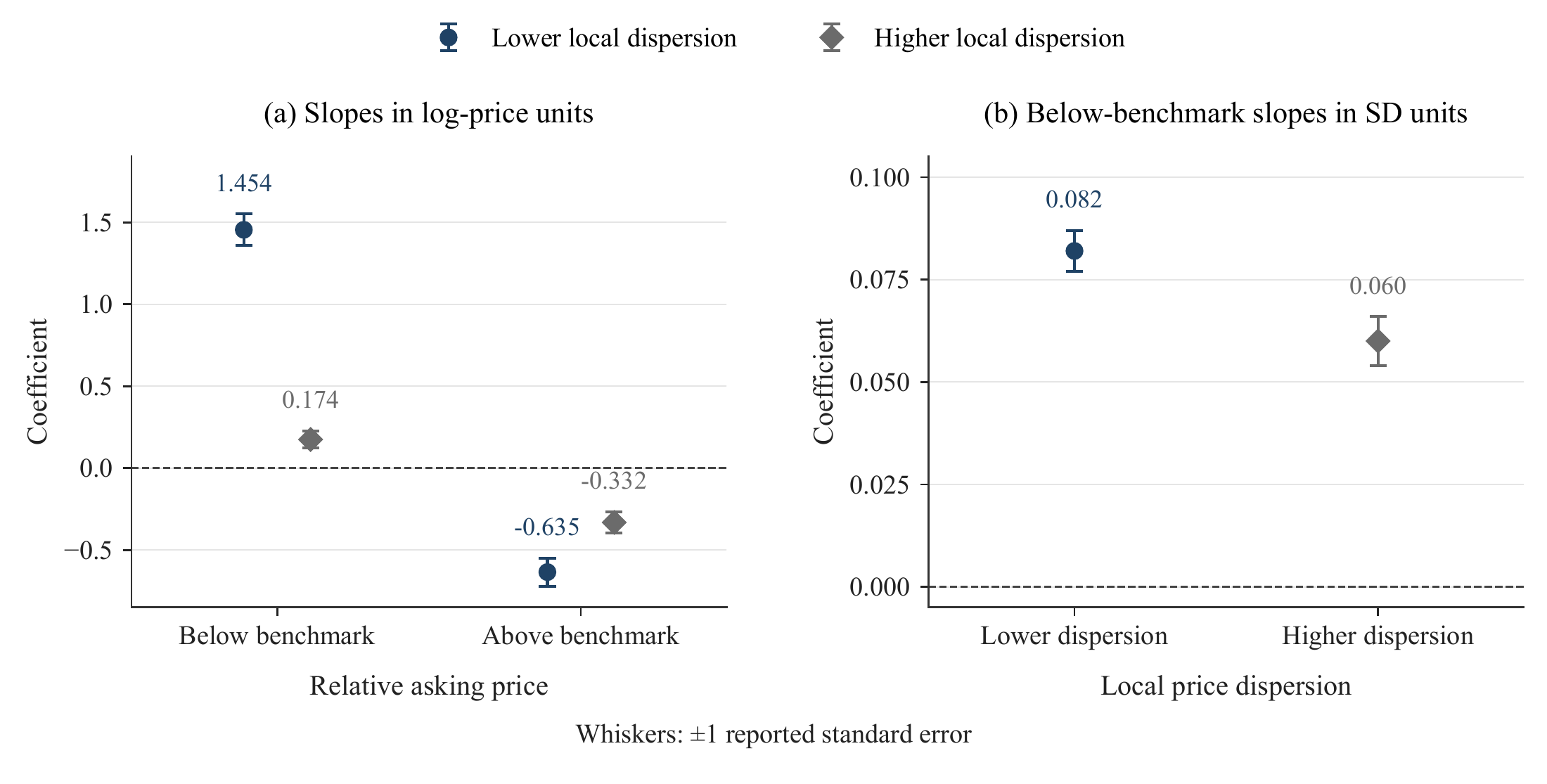
Abstract: China's housing boom surged for a decade yet deflated unevenly across market segments. I ask whether valuation uncertainty explains that heterogeneity. I merge 7.2 million online listings with matched transactions for Beijing, Guangdong, Zhejiang, and Shandong (2015–2022) and build two forward-looking metrics. First, squared residuals from a community-fixed-effect hedonic provide an ex-ante measure of price uncertainty. Second, the gap between a listing's quality-adjusted price and the prior-month community benchmark yields its expected one-month return. I show that the return-uncertainty slope turns sharply more negative after each shock, with the largest swings in top-quartile (hard-to-value) listings. Buyer-attention and supply-stock regressions indicate that thinner liquidity amplifies the pricing of risk. These results demonstrate that policy signals and credit constraints can rapidly re-price uncertainty, offering regulators an empirical gauge for monitoring speculative cycles in opaque real-estate markets.
Presented at: USI IdEP Brown Bag (USI, 2024)
Industrial Reallocation and Marriage-Market Dynamics: Evidence from China’s Third Front
with Yi Yao (USI)
Show Abstract
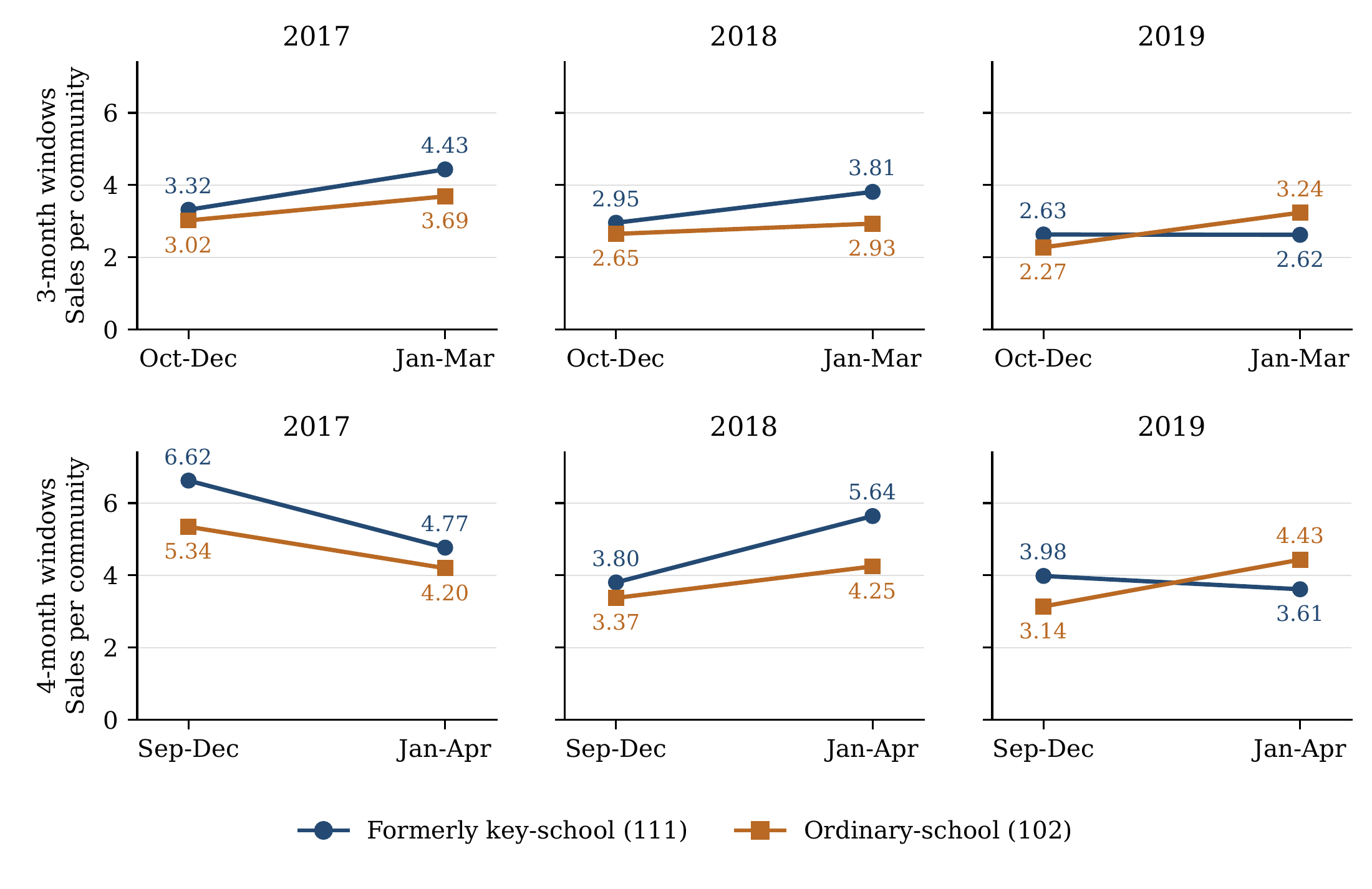
Abstract: We examine how a large-scale state development campaign affects family formation by reshaping local labor demand. Prior work suggests that expansions in blue-collar employment can increase marriage and fertility because they create a larger pool of steady, decently paid male earners. We study China’s Third Front construction program—a short-lived but massive effort to relocate and build strategic industrial capacity in the interior—as a setting in which these forces shift sharply and potentially at different horizons. Linking city-level exposure measures to micro data on marriage and births, we document two distinct effects. During the Third Front period, men in more heavily designated areas delay marriage as local manufacturing intensity rises. This pattern contrasts with prior evidence, but is consistent with a temporary deterioration in marriage-market conditions driven by rapid industrial expansion and the resulting shift in the local sex ratio. After the program wanes, the surviving industrial base is associated with higher marriage rates. Overall, the results show that state-led industrialization can generate offsetting, time-varying effects on the marriage market, operating through abrupt changes in local population composition in the short run and improved economic opportunities in the longer run.
Presented at: USI IdEP Brown Bag (USI, 2026)
Tax Regime and Organizational Choice: Evidence from China’s VAT Expansion
Show Abstract
Abstract: I study how shifting from gross-receipts taxation to value-added taxation affects organizational form at entry. Using a new province–industry–year panel of Chinese registrations (1960–2022), I construct a province-level VAT coverage intensity—the share of local stock in VAT-covered services—based on the pre-2016 pilot scope and the nationwide expansion on May 1, 2016. A two-way fixed-effects design relates the formal entry share to coverage intensity. To address endogeneity, I use a Bartik instrument that interacts pre-2011 industry shares with time-varying national coverage by industry. The first stage is strong. IV estimates imply that a 10-percentage-point increase in coverage raises the formal entry share by 0.13 percentage points, consistent with input-credit and invoice-chain mechanisms.
Presented at: USI IdEP Brown Bag (USI, 2026)
Work in Progress
Tail Risk Beliefs and Retail Trading
Consumption under Constraints: Uncovering Inequality in Discretionary Spending
Presented at: USI IdEP Brown Bag (USI, 2022)
Tax-Induced Labor Supply Distortions and Household Welfare: Evidence from Japan
慶應義塾大学パネルデータ設計・解析センター(PDRC)プロジェクトID:7545
Panel Data Research Center (PDRC) at Keio University Project ID: 7545
Coding & Resources
Python
Here is a highly recommended course to learn Python coding for economics:
Matlab
- Structural Estimation: Placeholder
A very good introductory lecture on structural estimation is available on YouTube, offered by Prof. Michael Keane.
R
- Structural Estimation: Placeholder
Investment Journey
This page documents my investment journey beginning in 2025. I will track and report the realized returns for each investment.
Portfolio as of April 16, 2025
On February 5, 2025, I purchased the following stocks in response to the AI boom in China:
- Alibaba – 28.1% allocation at HKD 97.00 per share; realized on February 13, 2025 at HKD 115.40.
- HSBC – 46.4% allocation at HKD 80.15 per share; realized on March 11, 2025 at HKD 85.00.
- Xiaomi (W) – 25.5% allocation at HKD 39.15 per share; realized on February 13, 2025 at HKD 41.80.